
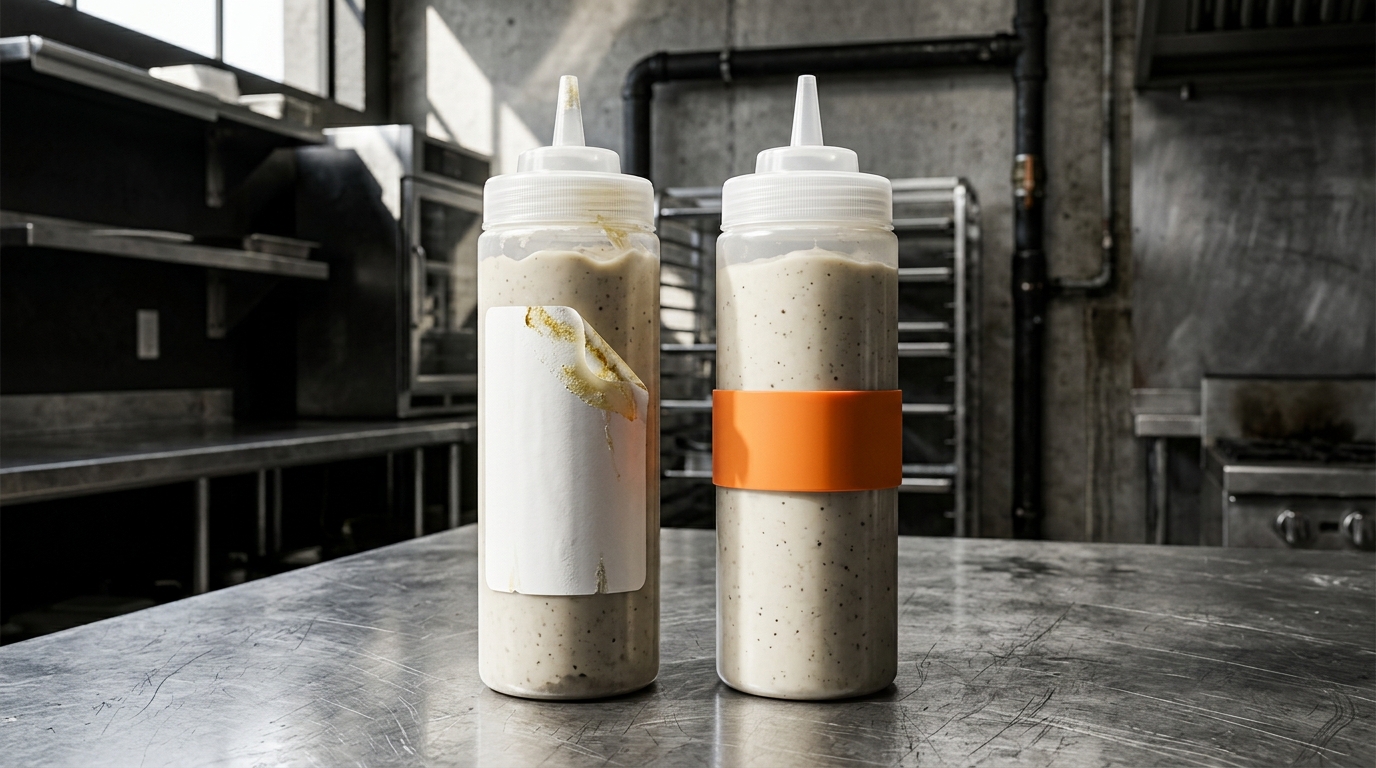
Silicone bottle bands and vinyl labels can both help identify a bottle, but they attach in different ways. That difference matters more than broad durability slogans.
Adhesive versus tension
A vinyl label uses pressure-sensitive adhesive. Its performance depends on the film, adhesive, bottle surface, application, detergent, handling, and wash conditions.
A Kitchen Bandits band stretches around the bottle and grips by tension. It has no adhesive edge and leaves no adhesive residue from the band when removed. The correct fit depends on the bottle’s outside diameter, not its stated capacity.
Fixed print versus a writable surface
Many vinyl labels carry fixed print. Kitchen Bandits bands provide a white silicone writing area. Use the included black oil-based paint marker, then remove the writing with isopropyl alcohol when the bottle contents change. Light ghosting can remain.
Colored oil-based ink can leave more visible ghosting. Permanent marker is an optional longer-hold choice that may be harder to remove and may leave a stronger trace.
Compare only what the evidence supports
Kitchen Bandits publishes no numbered dishwasher-cycle life for its bands and no guaranteed replacement schedule for vinyl. It also does not publish an annual labor saving or return period. Those outcomes vary too much by kitchen and need real evidence before they belong in product copy.
The approved product facts are more useful: food-grade, BPA-free silicone; dishwasher safe at commercial temperatures; heat-safe to 450°F / 232°C; no adhesive; and an alcohol-removable writing system with an honest ghosting caveat.
Use vinyl when a fixed adhesive label suits the surface and workflow. Use a silicone bottle band when a tension fit and reusable writing surface suit the bottle.